
How to Start an Online Store in Pakistan in 2026: Step-by-Step Guide
A practical step-by-step guide to starting an online store in Pakistan: choosing products, platform, payments, couriers, legal basics and your first marketing plan.

Key takeaways
- Validate demand before you buy stock: test with a small batch and a few ads.
- Pick a platform you can run daily; Shopify is the fastest start for most new brands.
- Plan for cash on delivery, order confirmation and returns from day one.
- Budget for marketing, not just inventory: a store without traffic sells nothing.
Starting an online store in Pakistan has never been easier. You can build a website in a weekend, connect a courier in a day and start running ads the same week. But most new stores fail within months, not because the idea was bad, but because the basics were skipped: no demand check, no plan for COD, and no budget for marketing.
This guide walks through the steps we recommend to brands we help launch, in the order that saves the most money.
Step 1: Choose a product people already want
The best products for a new Pakistani store usually share a few traits:
- Clear demand: people already search for it or buy it on marketplaces and Instagram.
- Healthy margin: enough room after product cost, packaging, delivery and ads. Aim for at least 40 to 50% gross margin before ad costs.
- Easy to ship: light, hard to break and not seasonal only.
- Visual appeal: products that look good in a short video sell better with social ads.
Before ordering large stock, test with a small batch. A few days of ads to a simple product page tell you more than weeks of guessing.
Step 2: Pick your platform
| Option | Best for |
|---|---|
| Shopify | Fast launch, easy to manage, strong app ecosystem |
| WooCommerce (WordPress) | More control, content-heavy brands, existing WordPress sites |
| Instagram/Facebook shop only | Very early testing, but hard to scale and track |
| Marketplaces like Daraz | Extra sales channel, not a replacement for your own store |
We compare the two main options in detail in Shopify vs WooCommerce in Pakistan. For most first-time founders, Shopify is the quickest path to a store that looks professional and loads fast on mobile.
Step 3: Sort out the legal and financial basics
- Register your business name and get a tax number (NTN) so you can open a business bank account and work with payment gateways.
- Open a separate bank account for the store so you can see real profit.
- Keep simple records of every order, return and expense from day one.
Requirements change, so confirm the latest registration and tax rules with a local accountant before you launch.
Step 4: Set up payments and delivery
Most Pakistani customers still prefer cash on delivery, so plan for it:
- COD through a courier that integrates with your store.
- Online payments through a local gateway, plus bank transfer and mobile wallets like JazzCash and Easypaisa.
- Order confirmation on WhatsApp before dispatch to reduce fake orders. Our COD returns guide explains why this matters so much.
Step 5: Build product pages that sell
Your product page does the selling when you’re not there. Include:
- Real photos and a short video, shot in good light on a phone if needed.
- A clear price, delivery time and delivery charges.
- Size guides, materials and answers to common questions.
- Reviews, customer photos and your return policy.
- A visible WhatsApp button for questions.
Step 6: Install tracking before you spend on ads
Connect the Meta Pixel and Conversions API, Google Analytics 4 and, if you’ll use them, Google Ads and TikTok tracking. Without tracking, you can’t tell which ads make money. Follow our Pixel and CAPI setup guide.
Step 7: Plan your first 90 days of marketing
- Weeks 1 to 2: organic launch on Instagram and Facebook, friends and family, WhatsApp broadcast to your network.
- Weeks 2 to 6: purchase-optimised Meta ads with 5 to 10 creatives to find winners. See our Facebook ads guide.
- Weeks 6 to 12: scale winning ads, add retargeting and start collecting reviews and repeat customers.
Set aside a marketing budget alongside your inventory budget. A beautiful store with no traffic sells nothing.
Common mistakes to avoid
- Buying too much stock before testing demand.
- Copying a competitor’s prices without knowing your own costs.
- Ignoring returns when calculating profit.
- Boosting posts instead of running proper sales campaigns.
Want a second opinion on your launch plan? Our team offers a free audit for new and growing stores.
Frequently asked questions
How much money do I need to start an online store in Pakistan?
It depends on your product and stock, but plan separately for inventory, website costs, packaging and a marketing budget for at least the first two to three months.
Is Shopify available in Pakistan?
Yes. Pakistani businesses can run Shopify stores using cash on delivery and local payment gateways.
Do I need to register my business to sell online?
To open a business bank account and use most payment gateways you will need proper registration and a tax number. Check current rules with a local accountant.
Should I sell on Daraz or my own website?
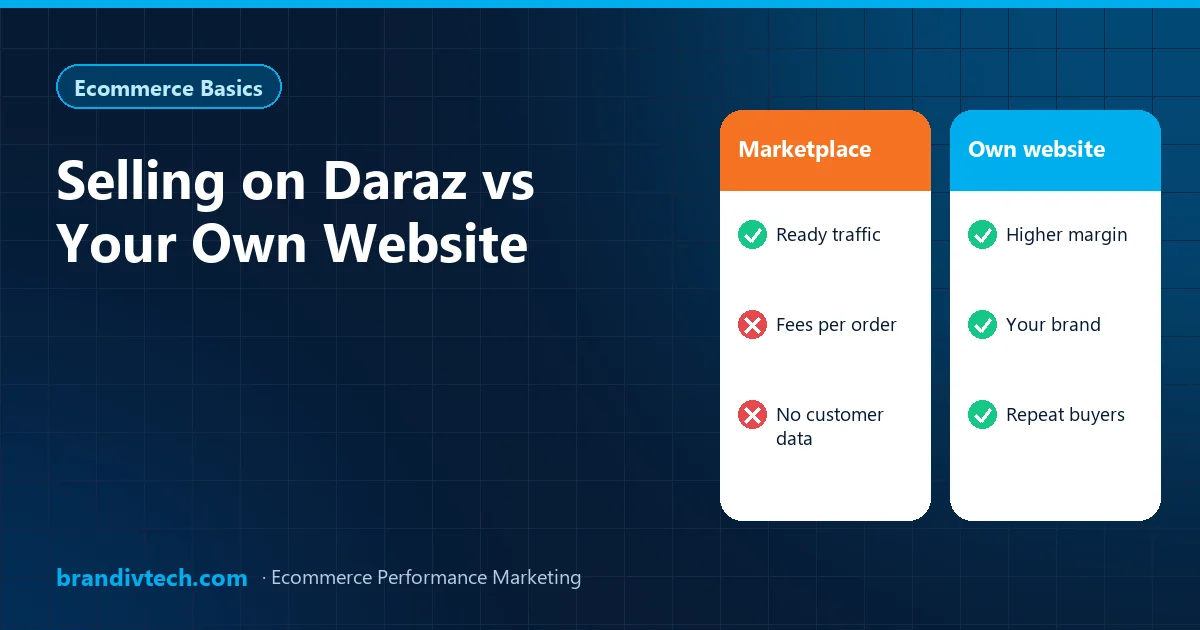
Many brands use both. Marketplaces bring ready buyers, while your own website builds your brand, customer data and higher margins.
Head of Marketing at Brandiv Technologies. 6+ years running Meta, Google and TikTok campaigns for ecommerce and lead generation brands across 10+ countries. See case studies →
Related guides
Selling on Daraz vs Your Own Website: Which Is Better for Pakistani Brands?
Reach, margins, customer data and control: how marketplaces and your own store compare, and how to use both.
8 min read →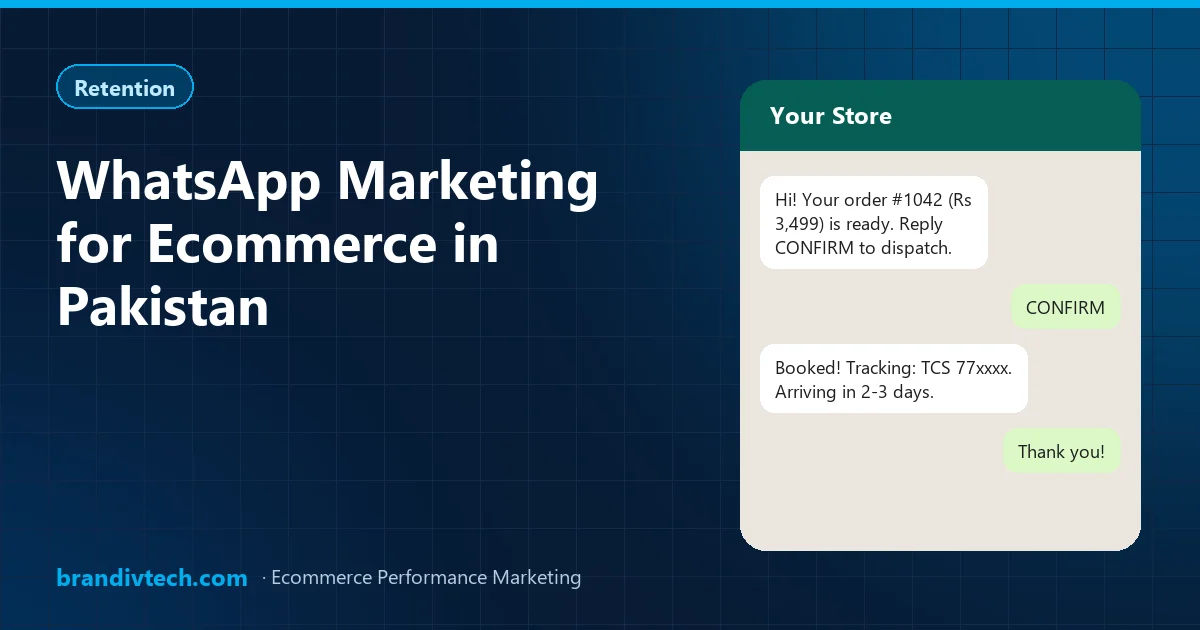
WhatsApp Marketing for Ecommerce in Pakistan: Sell More and Reduce Returns
Order confirmations, abandoned carts, broadcasts and repeat sales: how to turn WhatsApp into a profit channel for your store.
8 min read →
Facebook Ads Getting Clicks but No Sales? 9 Reasons and How to Fix Them
Clicks but no orders? Nine common reasons Meta ads don’t convert, and the exact fix for each one.
9 min read →Launching a store? Get a free launch plan
Tell us about your store and we’ll get back to you with a clear plan to grow sales profitably.
- Ad account & campaign structure review
- Creative and offer feedback
- Tracking (Pixel / CAPI / GA4) check
- Clear next steps, no obligation